The Bone Density Timeline: What Happens to Your Skeleton Each Decade After 30
Quick Answer: Bone density peaks around age 30, stays roughly stable through the mid-30s, then declines gradually until menopause, when the decline accelerates sharply for 5-10 years before slowing again. The window to build peak bone mass is earlier than most women realize.
Most women assume bone density is a concern for their 60s and beyond. In reality, the most important decade for your skeleton might already be behind you — and the decade right before menopause is where the real risk begins building, quietly, with no symptoms at all.

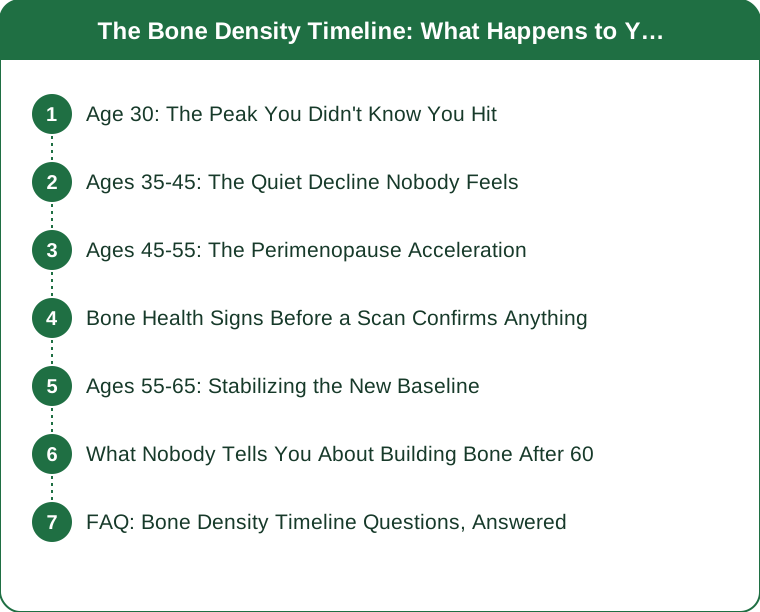
Age 30: The Peak You Didn’t Know You Hit
Peak bone mass — the maximum density and strength your skeleton will ever have — is typically reached between ages 25 and 30. After this point, the goal shifts from building bone to preserving it, which is a fundamentally different and often less-discussed phase of bone health.
Most bone-health messaging targets women in their 50s and 60s, which means the 30-something window, when preservation habits matter most, gets almost no attention. Weight-bearing exercise, adequate calcium and vitamin D, and avoiding excessive dieting in this decade have an outsized effect on how much density you’re carrying into the higher-risk years ahead.
If you’re in your 30s reading this, the actionable takeaway isn’t alarm — it’s that habits started now (resistance training especially) do more for your future skeleton than the same habits started at 55, simply because you’re preserving from a higher baseline.
Ages 35-45: The Quiet Decline Nobody Feels
Bone density typically declines gradually during this decade, at roughly 0.5-1% per year for most women, with zero symptoms. There’s no pain, no visible change, nothing that signals it’s happening — which is exactly why it’s called a ‘silent’ process, and why waiting for a symptom before addressing it means waiting too long.
This is also the decade where lifestyle factors compound. Chronic under-eating, excessive alcohol, smoking, and long stretches of low-impact-only exercise all quietly accelerate this normal decline beyond its baseline rate. None of these show up on a scale or in the mirror the way they show up on a bone density scan.
A DEXA scan isn’t typically recommended for this age group unless there’s a specific risk factor (family history, early menopause, certain medications), but weight-bearing and resistance exercise — walking, jogging, strength training — remain the most effective preservation tool available during this window regardless of scan status.
Ages 45-55: The Perimenopause Acceleration
This is the decade where bone density decline meaningfully accelerates, driven by falling estrogen levels during perimenopause and into menopause. Estrogen plays a direct protective role in bone remodeling, and as it drops, bone breakdown starts to outpace bone rebuilding at a faster rate than at any point since adolescence.
In the first 5-7 years after menopause specifically, women can lose up to 20% of their bone density — a rate dramatically faster than the gradual decline of the preceding decade. This is the single most important window for proactive intervention: increased calcium and vitamin D, consistent weight-bearing and resistance exercise, and for some women, a conversation with a doctor about bone density testing or medication.
The accelerated timeline is exactly why waiting until symptoms or a fracture to address bone health misses the window where intervention is most effective — by the time symptoms appear, meaningful density has often already been lost.

Bone Health Signs Before a Scan Confirms Anything
Because bone loss is silent, most women only find out through a DEXA scan, often prompted by a fracture that reveals unexpectedly low density. But there are a few earlier, indirect signals worth paying attention to: a noticeable loss of height (even half an inch), a fracture from a fall that seems disproportionately minor, or a strong family history of osteoporosis or hip fracture in a parent.
Receding gums and worsening posture are sometimes mentioned as early indirect signals too, though they’re far less reliable than the signs above and shouldn’t be relied on alone.
None of these confirm anything on their own — only a DEXA scan does that — but they’re reasonable reasons to bring bone density up proactively with a doctor rather than waiting for the standard screening age of 65.
Ages 55-65: Stabilizing the New Baseline
After the sharp post-menopause acceleration, bone loss typically slows to a steadier, more gradual rate again, though from a lower baseline than before. This decade is about consolidating gains from consistent exercise and nutrition, and for some women, this is when a first DEXA scan (standard screening starts at 65, earlier with risk factors) provides an actual number to work from instead of general precaution.
Weight-bearing exercise remains protective at this stage, but the emphasis shifts to also include balance and fall-prevention training, since a fracture risk isn’t just about bone density — it’s also about the likelihood of falling in the first place. Combining strength training with balance work addresses both halves of fracture risk simultaneously.
Calcium needs typically increase slightly in this decade (around 1,200mg daily for most women), and vitamin D absorption becomes less efficient with age, which is part of why supplementation is more commonly recommended here than in earlier decades.
What Nobody Tells You About Building Bone After 60
There’s a persistent myth that bone density can’t meaningfully improve after a certain age — that all you can do past 60 is ‘slow the loss.’ This isn’t fully accurate. While rebuilding lost density is harder than preserving existing density, resistance training specifically has been shown to measurably improve bone density even in women in their 60s and 70s, not just slow its decline.
The key variable is load — walking alone, while good for cardiovascular health, provides relatively modest bone-building stimulus compared to resistance training with actual external weight (dumbbells, resistance bands, bodyweight exercises done with intent). Bone responds to mechanical stress, and that stress needs to progressively increase over time, the same way muscle does.
This is genuinely good news buried under a lot of fatalistic messaging: it’s rarely ‘too late’ to meaningfully improve bone health outcomes through targeted strength training, even well past 60.
FAQ: Bone Density Timeline Questions, Answered
At what age should I get my first bone density scan?
Standard guidelines recommend age 65 for average-risk women, but earlier screening is often recommended with risk factors like early menopause, family history, or long-term steroid use — worth discussing with a doctor in your 50s if any apply.
Can exercise really reverse bone loss, or just slow it?
Resistance training with adequate load has been shown to modestly increase bone density in some studies, not just slow its decline, though the effect is generally more pronounced for preservation than for full reversal of significant loss.
Is walking enough for bone health, or do I need weights?
Walking provides some weight-bearing benefit for the legs and hips but generally isn’t enough stimulus on its own — combining it with resistance training produces meaningfully better bone density outcomes than walking alone.
This is general information, not medical advice — talk to a doctor about your individual risk factors and whether earlier bone density screening makes sense for you.
TL;DR:
- Peak bone mass hits around age 30 — habits from your 30s matter more for lifetime bone health than most realize
- Bone loss is silent through your late 30s and 40s, with no symptoms to warn you
- The 5-7 years after menopause bring the sharpest acceleration in bone loss — up to 20% density loss
- A few indirect signs (height loss, minor-fall fractures, family history) are reasons to ask about early screening
- Resistance training with real load can improve bone density at any age, not just slow its decline
Bone density isn’t a single number that appears at 65 — it’s the result of decades of habits, and the earlier those habits start, the more skeleton you have to work with later.
Keep Reading
This article is for general informational purposes only and is not medical advice. Always consult a qualified health professional for guidance specific to you.