The Complete Guide to Building Bone Density Through Strength Training
Quick Answer: Bone density responds specifically to mechanical loading — weight-bearing and resistance exercise above your current strength level. A program combining progressive strength training 2-3x/week with high-impact movement builds and maintains bone density more effectively than walking or swimming alone.
Bone loss accelerates for women after 40, particularly through the menopause transition, but bone is living tissue that responds to demand throughout life. This guide covers exactly which types of exercise trigger bone-building signals, how much load is actually needed, and how to structure a realistic weekly plan.
Why does mechanical loading matter more than cardio for bone density?
Bone remodels constantly through a cycle of breakdown and rebuild, and the rebuild side responds to mechanical stress — specifically, forces that exceed what the bone normally experiences. Walking, while valuable for many aspects of health, applies relatively low and repetitive forces that bones adapt to quickly and then stop responding to as a stimulus.
Resistance training and impact activities apply higher, more varied loads that continue to signal bone-building cells (osteoblasts) even as fitness improves, because the load itself progressively increases. Swimming and cycling, despite being excellent cardiovascular exercise, are non-weight-bearing and show minimal bone density benefit in research specifically because the water or seat removes the gravitational loading bones need.
This is why a lifelong swimmer can have lower bone density than a sedentary but occasional weight-lifter — the specific stimulus matters more than overall fitness level or activity minutes.
What exercises build bone density most effectively?
The strongest evidence supports a combination of two categories:
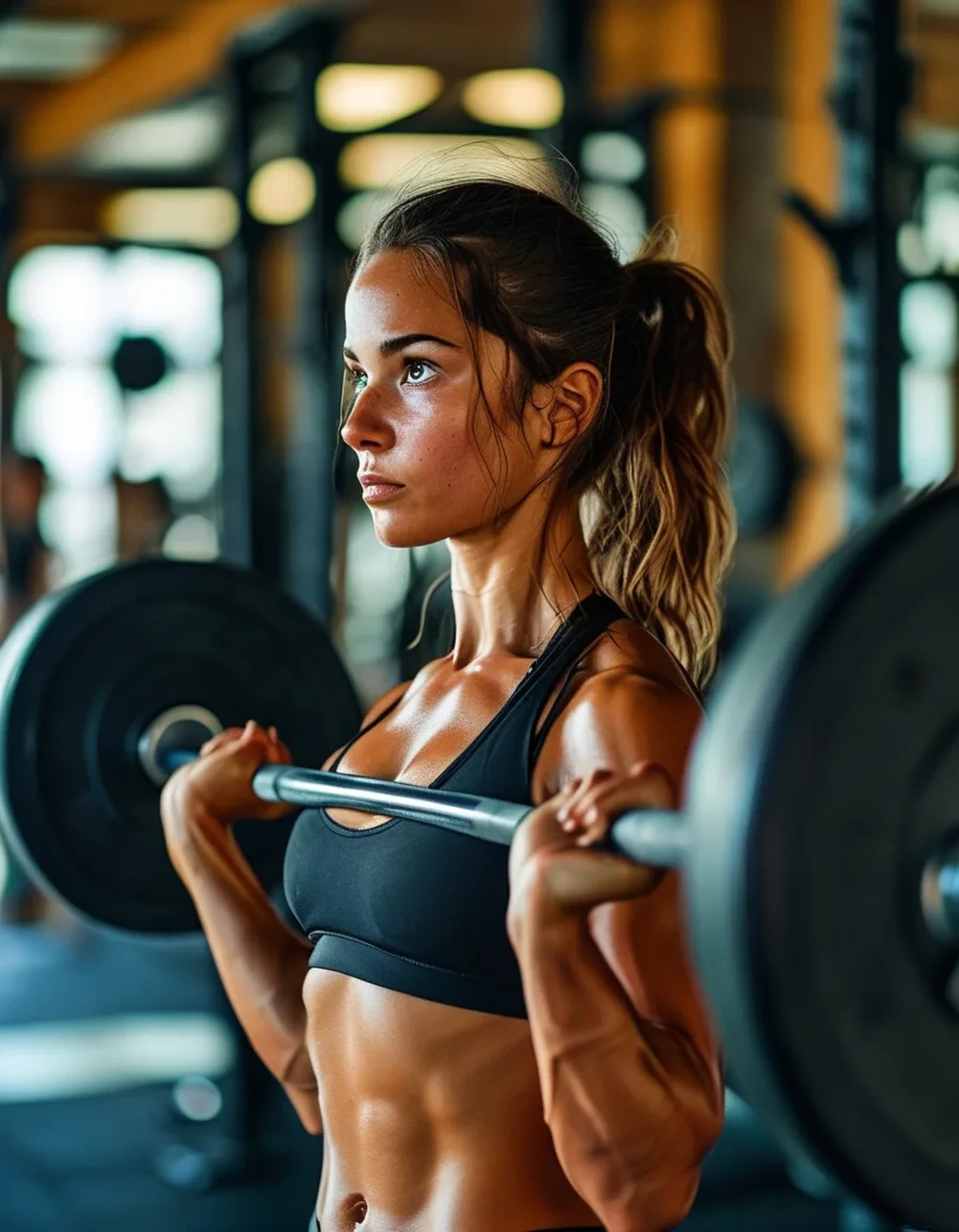
Progressive resistance training — compound lifts like squats, deadlifts, and presses at a load heavy enough to be challenging by the last 2-3 reps of a set (roughly 70-85% of your one-rep max). Machines and free weights both work; free weights add a balance-training benefit that further reduces fall risk.
High-impact loading — activities involving brief ground-reaction forces well above body weight: jumping, hopping, stair climbing at pace, or sports involving quick direction changes. Even short bouts (a set of 10-20 jumps) create meaningful bone-loading signals, and research on jumping protocols shows measurable hip bone density improvements over 6-12 months in postmenopausal women.
The combination outperforms either alone — resistance training builds density broadly, while impact training specifically targets the hip and spine, the two sites most vulnerable to fracture.

How should a weekly bone-building program be structured?
A realistic, sustainable structure: 2-3 resistance sessions per week hitting all major muscle groups, each session 30-45 minutes, progressing load every 1-2 weeks as strength allows. Add 2-3 short impact sessions (10-15 minutes) on non-lifting days or right after a lifting session — this can be as simple as 3 sets of 10 controlled jumps or a stair-climbing interval.
Rest and recovery matter as much as the loading itself: bone remodeling happens over weeks, not within a single session, so consistency across months outperforms occasional intense efforts. Aim for at least 6 months before expecting measurable density changes on a DEXA scan, since bone remodels more slowly than muscle adapts.
What mistakes reduce the effectiveness of a bone-building program?
Staying in a comfortable weight range too long — bone needs progressive overload just like muscle does; a load that felt hard 3 months ago and still feels the same now has stopped providing a strong stimulus.
Skipping impact work entirely out of fall-injury caution — low-impact alternatives like marching in place or gentle step-ups can be a reasonable starting point for those with existing fracture risk, building toward higher impact as confidence and strength improve, rather than avoiding impact indefinitely.
Relying on calcium and vitamin D alone — nutrition supports bone health but doesn’t replace the mechanical loading signal; supplements without loading show minimal density improvement in research.
Inconsistent training — sporadic sessions don’t accumulate the same remodeling signal as a steady 2-3x/week pattern, even if total monthly volume is similar.
FAQ: Bone Density Training Questions, Answered
Is it too late to build bone density after 50 or 60?
No — research consistently shows bone density improvements are achievable at any age with appropriate progressive loading, though the rate of improvement is generally slower than in younger adults. Consistency matters more than starting age.
Do I need a DEXA scan before starting a bone-building program?
It’s useful as a baseline if accessible, especially for those with risk factors (family history, early menopause, certain medications), but isn’t required to safely begin a general strength and impact program. Check with a doctor first if you have a known fracture or osteoporosis diagnosis.
How much impact is too much for someone with low bone density?
This is genuinely individual and worth discussing with a doctor or physical therapist if you have diagnosed osteopenia or osteoporosis — a supervised progression from low to moderate impact is typically recommended over jumping straight into high-impact work. This is general information, not medical advice.
TL;DR:
- Mechanical loading (not cardio) drives bone-building signals — resistance training and impact work are the two proven categories
- Progressive resistance 2-3x/week plus short impact sessions outperforms either alone
- Bone remodels over months — expect at least 6 months before measurable DEXA changes
- Progressive overload, consistency, and combining calcium/vitamin D with loading (not instead of it) all matter
Bone responds to demand at any age — the program above is a realistic starting structure, not a one-time fix. This is general information, not medical advice.
Keep Reading
This article is for general informational purposes only and is not medical advice. Always consult a qualified health professional for guidance specific to you.