Which Bone Health Supplements Are Actually Worth Taking?
Quick Answer: Calcium and vitamin D have the strongest evidence for supporting bone health when dietary intake falls short, vitamin K2 has emerging but promising evidence, and many other ‘bone health’ marketed supplements (collagen, boron, certain herbal blends) lack strong clinical evidence specifically for bone density.
Walk down a supplement aisle and half the products claim some bone health benefit. The evidence behind each one varies a lot more than the marketing suggests.

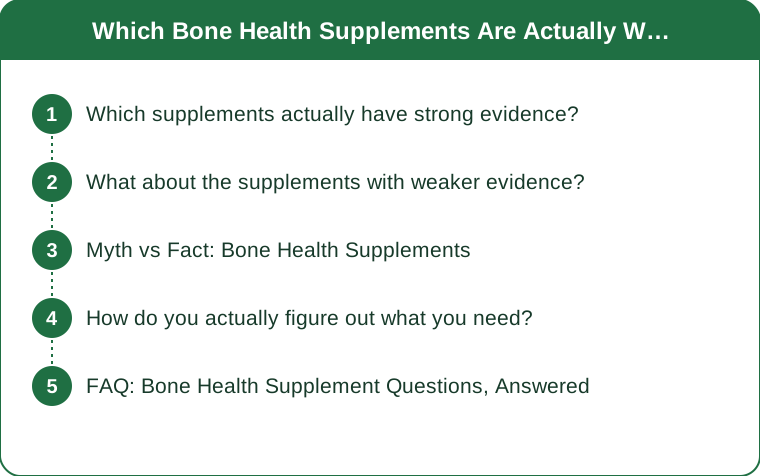
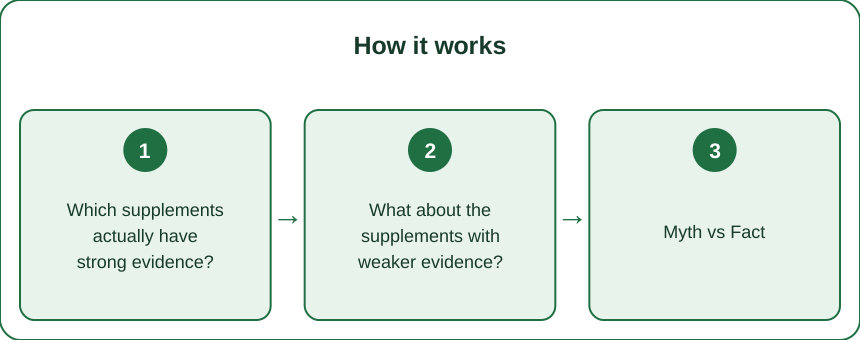
Which supplements actually have strong evidence?
Calcium and vitamin D remain the most well-established pair — vitamin D is essential for calcium absorption, and deficiency in either is directly linked to reduced bone density in extensive research, particularly in postmenopausal women.
Vitamin K2 has growing evidence for helping direct calcium to bones rather than soft tissue, though the research base, while promising, isn’t as extensive as calcium and D’s decades of data.
What about the supplements with weaker evidence?
Collagen supplements show some promising early research for bone markers, but the evidence is still developing compared to calcium and D, and results are less consistent across studies.
Boron, silica, and many proprietary ‘bone blend’ supplements are marketed heavily but generally lack the kind of large, controlled clinical trials that would confirm a meaningful independent effect on bone density.

Myth vs Fact: Bone Health Supplements
Myth: More calcium is always better for bones. Fact: Excess calcium supplementation beyond recommended levels hasn’t shown additional bone benefit and has been linked to other health concerns in some research — more isn’t automatically better.
Myth: Supplements can replace weight-bearing exercise for bone density. Fact: Mechanical loading from weight-bearing and resistance exercise is one of the strongest known drivers of bone density — supplements support but don’t replace that mechanism.
Myth: If you eat dairy, you don’t need to think about vitamin D. Fact: Vitamin D synthesis depends heavily on sun exposure and isn’t guaranteed by diet alone, especially in northern climates or with limited sun exposure — many people are deficient regardless of diet.
How do you actually figure out what you need?
Get bloodwork for vitamin D levels before assuming you need to supplement — deficiency is common but not universal, and appropriate dosing depends on your actual level, not a guess.
Prioritize dietary calcium first (dairy, leafy greens, fortified foods) and use supplementation to fill genuine gaps rather than stacking supplements on top of an already adequate diet, since excess calcium supplementation isn’t clearly beneficial.
FAQ: Bone Health Supplement Questions, Answered
How much vitamin D should I take for bone health?
This depends on your blood levels and should ideally be guided by testing and a healthcare provider, since needs vary significantly by individual and geography.
Is it better to get calcium from food or supplements?
Dietary calcium is generally preferred when achievable, with supplements filling genuine gaps — some research suggests dietary sources may have a slight edge in overall health outcomes.
Do I need a bone health supplement if I already exercise regularly?
Exercise and supplementation address different mechanisms (mechanical loading vs. nutrient availability) — both matter, and one doesn’t replace the other. This is general information, not medical advice.
TL;DR:
- Calcium and vitamin D have the strongest, most established evidence for bone health
- Vitamin K2 shows promising but less extensive evidence than calcium and D
- Many marketed ‘bone blend’ supplements lack strong independent clinical evidence
- Get vitamin D bloodwork before assuming you need to supplement, and prioritize dietary calcium first
This is general information, not medical advice — a healthcare provider can guide supplementation based on your actual levels and risk factors.
Keep Reading
This article is for general informational purposes only and is not medical advice. Always consult a qualified health professional for guidance specific to you.