Strong Bones for Life: What Every Woman Should Know Before (and After) 50
Your skeleton is not scaffolding — it is living tissue, constantly demolished and rebuilt, and for women its story has a plot twist: bone density peaks around 30, holds through midlife, then drops sharply in the years around menopause — up to 20% in that window alone. Half of women over 50 will break a bone due to osteoporosis. The empowering flip side: bone responds to training and nutrition at every age, and the playbook is clear. This is it. (Informational — bone-density screening and treatment decisions belong with your doctor.)

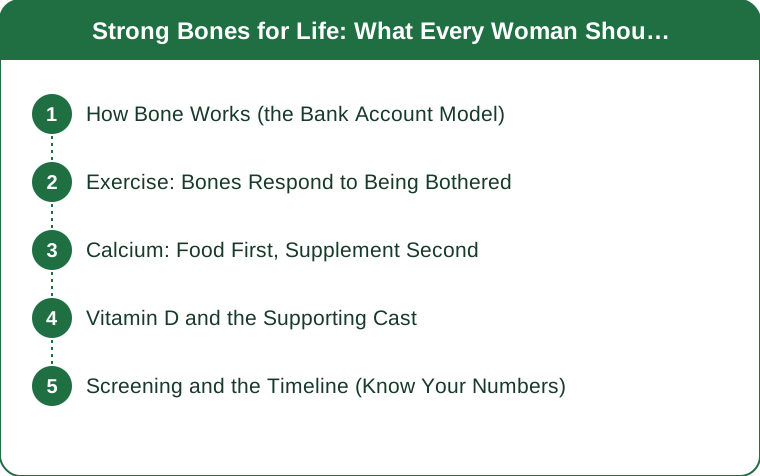
How Bone Works (the Bank Account Model)
Bone remodels forever: demolition cells clear old tissue while construction cells lay new — a full skeleton every decade or so. Until roughly 30 you deposit faster than you withdraw (peak bone mass = your lifetime savings); after that the account slowly draws down, and at menopause the drop in estrogen — bone’s great protector — accelerates withdrawals dramatically. This model explains the whole strategy: young women maximize deposits, midlife women slow withdrawals, and post-menopausal women do both while screening for trouble. Every age has a move. No age has none.
Exercise: Bones Respond to Being Bothered
Bone is petty in the most useful way — it strengthens specifically where stressed: impact and loading signal the construction crews. The evidence-backed lineup: strength training (squats, deadlift patterns, presses — the loading champion, twice weekly), weight-bearing impact (brisk walking, hiking, dancing, stairs; jogging and jump rope for those cleared for impact — swimming and cycling, wonderful elsewhere, do not count here), and balance work (tai chi’s fall-reduction data is stellar — because the fracture equation is bone strength times fall frequency). The prescription reads suspiciously like general fitness advice. Convenient, that.

Calcium: Food First, Supplement Second
The raw material, with numbers: women need roughly 1,000mg daily, 1,200mg after 50 — and food is the preferred delivery: dairy (300mg per serving of milk or yogurt), fortified plant milks and tofu, canned salmon and sardines with bones, leafy greens and almonds. The supplement caveat most women miss: more is not better — excess supplemental calcium has cardiovascular question marks and zero bonus bone benefit, so supplement only the gap between diet and target, in doses of 500mg or less at a time (absorption caps out). A food log for three days usually reveals you are closer than feared — or exactly which snack needs to become yogurt.
Vitamin D and the Supporting Cast
Calcium without vitamin D is a delivery with no receiving crew: D drives calcium absorption, and low levels are epidemic among women who work indoors and wear sunscreen (correctly). Most guidelines land at 600–800 IU daily with many clinicians preferring 1,000–2,000 IU — a blood test settles your number. The supporting cast: protein (bone is half protein by volume — another entry for the eat-more-protein file), vitamin K from greens, magnesium, and the subtraction list: smoking and heavy alcohol are both direct bone taxes. The pattern again: the bone-healthy life is just the healthy life, aimed at the skeleton.
Screening and the Timeline (Know Your Numbers)
The action calendar: all women at 65 qualify for DEXA bone-density screening — earlier with risk factors (early menopause, family fracture history, long steroid use, very low body weight, smoking); the scan is painless, brief and produces your T-score, the number that sorts normal from osteopenia (the warning zone where habits matter most) from osteoporosis (where effective treatments exist and work). Ask at your next physical rather than waiting to be offered. The theme of this entire guide compresses to one sentence: bone loss is largely silent until a fracture speaks — so the smart money acts during the silence.
Bone strategy by decade: deposit hard before 30, defend through midlife with lifting and walking, and after menopause — screen, supplement the tested gaps, and keep loading, because bone builds at every age that bothers to ask it. Start this week with the two-item version: strength training twice, calcium counted once. Your skeleton is quietly rebuilding itself right now either way. The only question is whether it is working from good instructions.
Keep Reading
This article is for general informational purposes only and is not medical advice. Always consult a qualified health professional for guidance specific to you.