A Day of Eating for Your Bones (No Milk Mustache Required)
Quick Answer: You can hit the commonly recommended 1,000–1,200mg of daily calcium through ordinary meals — a yogurt breakfast, a kale-and-tahini lunch, a tofu dinner, and sardines or canned salmon as a wildcard — without drinking a single glass of milk. Spreading calcium across the day, rather than loading it into one meal, also helps your body absorb more of it.
Your skeleton sends you a bill every single day — somewhere around 1,000 to 1,200mg of calcium — and most of us quietly pay half of it and hope the difference works itself out. It doesn’t; bone works more like a slow, unforgiving savings account than a forgiving one. The good news is that settling the debt doesn’t require a glass of milk at every meal. It just takes knowing which everyday foods are quietly doing the heavy lifting.

How much calcium do you actually need in a day?
Most adults are commonly advised to aim for somewhere in the 1,000–1,200mg range daily, though needs vary by age and other factors, so it’s worth checking with a doctor if you have specific bone health concerns. What matters practically is that this number is easier to hit than it sounds once you spread it across several meals instead of trying to cram it into one big dose.
What’s a calcium-rich breakfast that isn’t just a glass of milk?
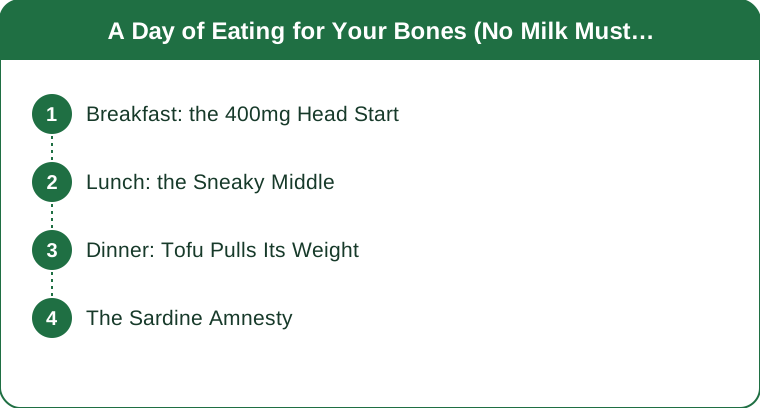
A Greek yogurt bowl with almonds and berries can deliver roughly 350–400mg of calcium before 9am, which is a serious head start on the day’s target. If dairy isn’t your thing, fortified plant milks are built to match dairy’s calcium content cup-for-cup — the key word to look for on the label is fortified, since unfortified almond or oat milk won’t carry the same numbers. A few easy swaps:
- Stir almonds or chia seeds into yogurt for texture and a small calcium bump
- Choose a fortified plant milk if you’re skipping dairy — check the nutrition label, don’t assume
- Berries add flavor without diluting the calcium math
Which lunch foods quietly carry a lot of calcium?
A big salad built around kale, white beans, and a tahini dressing covers a surprising amount of ground. Kale is considered one of the better-absorbed calcium sources among leafy greens — spinach contains calcium too, but compounds in spinach make much of it harder for your body to actually use. Tahini, which is just crushed sesame seeds, can add around 130mg per two tablespoons while tasting far more indulgent than “seed paste” suggests.

Can tofu really replace dairy at dinner?
Yes — if it’s calcium-set tofu, which is worth checking for specifically. Look at the label for “calcium sulfate” in the ingredients; that’s the tip-off that the tofu was set using a calcium-based coagulant, and one serving can carry somewhere around 300–400mg. A simple stir-fry with bok choy (itself a reasonably calcium-rich green) turns dinner into a genuinely bone-supportive meal without any dairy at all.
Do you actually have to eat the bones in canned fish?
For the calcium benefit, yes — the soft, edible bones in canned sardines are where most of the calcium lives, and a serving on toast with a squeeze of lemon can add 300mg or more. If sardines are a hard pass, canned salmon with bones is a reasonable substitute that works the same way. Both are inexpensive, shelf-stable, and require zero cooking skill.
Myth vs Fact: Calcium and Bone Health
Myth: You have to drink milk to get enough calcium. Fact: Yogurt, fortified plant milk, tofu, leafy greens, and canned fish with bones can collectively cover the same ground.
Myth: All leafy greens are equally good calcium sources. Fact: Some greens, like kale and bok choy, are better absorbed than others, like spinach, which contains compounds that bind up much of its calcium.
Myth: More calcium is always better. Fact: Hitting a reasonable daily target consistently matters more than maximizing any single number — and very high intakes aren’t necessarily beneficial, so it’s worth discussing your personal needs with a doctor rather than guessing.
Mini FAQ
What’s the easiest way to hit 1,200mg of calcium without supplements?
Spread it across the day: a yogurt or fortified-milk breakfast, a kale-and-tahini lunch, a calcium-set tofu or leafy-green dinner, and canned fish with bones as an occasional boost.
Is spinach a good calcium source?
It contains calcium, but compounds in spinach make much of it harder to absorb — kale and bok choy are generally considered better absorbed leafy-green options.
Should I take a calcium supplement instead of tracking food?
Food-first is usually the recommended approach since it comes with other nutrients that support absorption, but if you’re consistently falling short, it’s worth talking to a doctor about whether a supplement makes sense for you.
TL;DR
- Aim for roughly 1,000–1,200mg of calcium a day, spread across meals.
- Greek yogurt with almonds and berries gives you 350–400mg before 9am.
- Kale and tahini beat spinach for absorbable calcium at lunch.
- Calcium-set tofu (check the label for calcium sulfate) delivers 300–400mg at dinner.
- Sardines or canned salmon with bones add 300mg+ as an easy wildcard.
- Talk to a doctor if you have specific bone health concerns or questions about supplements.
Keep Reading
This article is for general informational purposes only and is not medical advice. Always consult a qualified health professional for guidance specific to you.