Building Strong Bones on a Dairy-Free Diet: The Complete Guide for Women Who Skip Dairy
Quick Answer: Dairy-free bone health is entirely achievable with intentional planning around calcium-rich plant foods (leafy greens, fortified plant milks, tofu, tahini), consistent vitamin D, and weight-bearing exercise — the risk isn’t dairy-free eating itself, it’s dairy-free eating done without a plan.
Every bone health article seems to open with ‘drink your milk,’ which is unhelpful advice when dairy isn’t part of your life, whether by allergy, intolerance, or choice. The actual science supports plenty of other paths to strong bones.

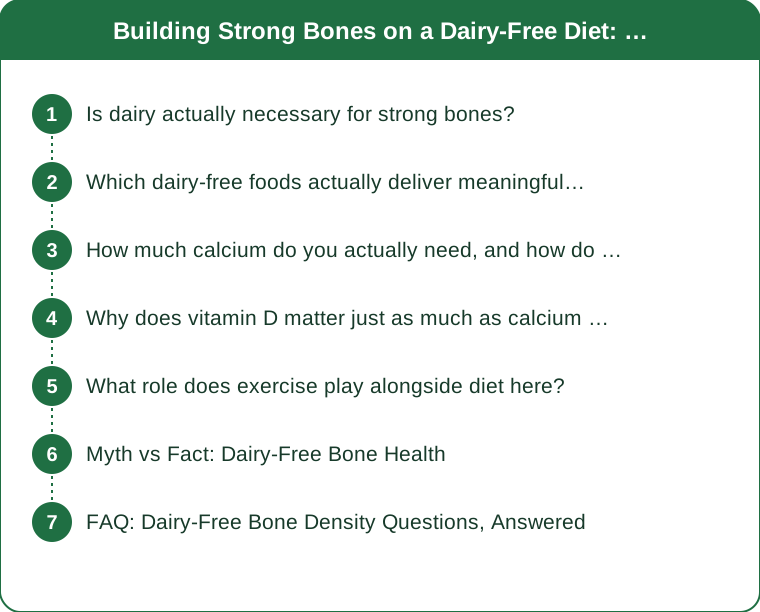
Is dairy actually necessary for strong bones?
No — dairy is one convenient source of calcium, not a required one. Bone density research consistently shows that populations with historically low dairy consumption can maintain strong bone health when other calcium sources, vitamin D, and weight-bearing activity are present.
What actually matters for bone health is total calcium intake, vitamin D status, protein adequacy, and mechanical loading through exercise — dairy happens to bundle several of these conveniently, but none of them require dairy specifically to achieve.
It helps to think of dairy as one tool in a larger toolkit rather than the foundation the whole structure depends on. Plenty of long-lived, bone-healthy populations around the world get little to no dairy and instead rely on a combination of plant calcium sources, sunlight, physical activity, and overall dietary pattern — which is exactly the model a dairy-free approach can follow.
What matters most is consistency over time, not any single meal or day. Bone tissue remodels continuously throughout life, breaking down and rebuilding on an ongoing basis, so the relevant question isn’t whether one day’s meals hit a perfect number, but whether your overall pattern over weeks and months reliably supplies what your bones need to keep pace with that remodeling process.
Which dairy-free foods actually deliver meaningful calcium?
Leafy greens like collard greens, bok choy, and kale offer well-absorbed calcium, though spinach is a notable exception since its oxalates block much of its calcium from being absorbed. Fortified plant milks (soy, almond, oat) are engineered specifically to match dairy milk’s calcium content, often around 300mg per cup, making them one of the easiest direct swaps.
Tofu made with calcium sulfate, tahini, almonds, white beans, and calcium-set edamame round out a realistic weekly rotation — checking tofu labels specifically matters, since not all tofu is processed with a calcium-containing coagulant.
- Fortified plant milk: roughly 300mg calcium per cup
- Calcium-set tofu: roughly 250-450mg per half cup, depending on brand
- Cooked collard greens: roughly 175mg per cup
- Tahini: roughly 130mg per 2 tablespoons
- Almonds: roughly 75mg per quarter cup
- White beans: roughly 100mg per cup
- Calcium-fortified orange juice: roughly 300mg per cup
Canned fish with edible bones, like sardines or salmon, is another strong option if your dairy-free diet still includes seafood, often delivering 200-350mg of calcium per serving along with vitamin D.
Building a rotating weekly list, rather than trying to hit every source every day, keeps this realistic long-term. A simple approach is picking 4-5 go-to calcium sources you genuinely enjoy and building meals around them regularly, rather than trying to force in every option on this list at once, which tends to fizzle out within a few weeks for most people.
How much calcium do you actually need, and how do you hit it daily?
Most adult women need 1,000mg daily, rising to 1,200mg after age 50, according to standard nutrition guidelines. Realistically, this means combining 2-3 calcium-rich foods per day rather than relying on a single source — a fortified plant milk in your coffee or cereal, a tofu-based lunch, and a leafy green dinner side can add up close to target without any dairy at all.
Spacing calcium intake across the day, rather than one large dose at once, also supports better absorption, since the body can only absorb so much calcium in a single sitting.
A sample day might look like: fortified plant milk with breakfast oats (300mg), a tofu stir-fry with bok choy at lunch (roughly 400mg combined), and a handful of almonds plus tahini dressing on a dinner salad (around 200mg) — already close to 900mg before counting anything else eaten that day. Tracking intake for even a week with a free nutrition app is a practical way to see where you actually land versus guessing.
It’s also worth knowing that the body can only absorb roughly 500-600mg of calcium at one time regardless of how much you eat in a single sitting, which is the main reason spacing intake across 2-3 meals genuinely outperforms trying to consume your entire daily target in one large meal or supplement dose.

Why does vitamin D matter just as much as calcium here?
Vitamin D enables calcium absorption — without adequate vitamin D, extra calcium in your diet doesn’t get used efficiently by your bones, regardless of the source. Vitamin D is naturally scarce in a dairy-free diet too, since fortified dairy milk is a common vitamin D source for many people.
Sunlight exposure, fortified plant milks (many are fortified with both calcium and vitamin D), fatty fish if you eat it, mushrooms exposed to UV light, or a supplement are the realistic dairy-free paths to adequate vitamin D — many people, dairy-free or not, benefit from testing their levels and supplementing if low.
Vitamin D deficiency is common even among people who do eat dairy, particularly in northern climates or for anyone who spends most daylight hours indoors, so this isn’t a dairy-free-specific concern — it’s worth everyone’s attention, but especially relevant here since one common food source is off the table.
A simple blood test can confirm your vitamin D level, and many doctors consider anything below 30 ng/mL worth addressing through supplementation, sun exposure, or diet changes. If you’ve never had this checked, a dairy-free bone health conversation is a reasonable moment to ask your doctor to add it to routine bloodwork.
What role does exercise play alongside diet here?
Weight-bearing and resistance exercise is arguably as important as diet for bone density, since bones respond to mechanical stress by building density, a process diet alone can’t trigger. Walking, jogging, dancing, and strength training with weights all qualify; swimming and cycling, while great for cardiovascular health, don’t provide the same weight-bearing stimulus.
Combining a calcium-and-vitamin-D-focused dairy-free diet with regular weight-bearing exercise addresses bone health from both the nutritional and mechanical angle, which matters more than optimizing diet alone.
A realistic weekly target is 2-3 sessions of resistance training plus regular weight-bearing cardio like brisk walking most days — this combination gives bones both the raw materials (from diet) and the mechanical signal (from exercise) they need to maintain or build density, especially important during and after the bone density changes that come with perimenopause and menopause.
Protein intake deserves a specific mention here too, since bone tissue is roughly a third protein by volume, not just mineral. A dairy-free diet still needs adequate protein from sources like beans, lentils, tofu, tempeh, and if included, eggs or fish, to support both the structural protein matrix of bone and the muscle mass that protects bones from fall-related fractures. Aiming for a source of protein at each meal, rather than concentrating it all at dinner, tends to support both muscle maintenance and satiety more evenly across the day. Combining a plant protein with a whole grain over the course of a day, like beans with rice or hummus with pita, also helps ensure you’re getting a full range of amino acids.
Myth vs Fact: Dairy-Free Bone Health
Myth: You need dairy or a calcium supplement, there’s no realistic dairy-free middle ground. Fact: A varied, intentional plant-based diet can meet calcium needs without supplements for many people, though supplements remain a reasonable backup if diet alone falls short.
Myth: Calcium is the only nutrient that matters for bone density. Fact: Vitamin D, protein, magnesium, and vitamin K all play supporting roles — a narrow focus on calcium alone misses meaningful pieces of the picture.
Myth: Plant calcium doesn’t absorb as well as dairy calcium, so it doesn’t really count the same. Fact: Absorption varies by specific food (oxalates in spinach do reduce absorption, for example), but many plant sources like fortified plant milk, tofu, and low-oxalate greens like bok choy and collards absorb comparably well to dairy calcium.
Myth: Bone density loss is inevitable and there’s nothing you can do about it once it starts. Fact: While some age-related bone density decline is normal, diet, exercise, and in some cases medication can meaningfully slow the rate of loss or even improve density at any stage, which is why proactive habits matter regardless of your current bone health status.
FAQ: Dairy-Free Bone Density Questions, Answered
Do I need a calcium supplement if I eat dairy-free?
Not necessarily — many people meet their needs through food alone with planning, but a supplement is a reasonable option if bloodwork or a bone density scan suggests you’re falling short.
How do I know if my dairy-free diet is actually meeting my calcium needs?
Tracking intake for a few days using a nutrition app gives a realistic picture, and discussing results with a doctor or dietitian can clarify whether supplementation makes sense for you.
Should I get a bone density scan if I’ve been dairy-free for years?
If you’re over 40, have risk factors, or have concerns about long-term intake, discussing a scan with your doctor is a reasonable, proactive step rather than something to wait on.
Is soy milk really as good a calcium source as dairy milk?
When fortified, yes — soy milk is often singled out among plant milks because its protein content also closely matches dairy milk, making it a particularly close nutritional substitute beyond just the calcium numbers.
Can I meet all my calcium needs through supplements alone and skip the food planning?
You technically can, but food-based calcium tends to come packaged with other bone-supporting nutrients like magnesium and vitamin K, so most dietitians recommend prioritizing food sources first and using supplements to fill genuine gaps rather than as a full replacement for dietary planning.
Does age change how much calcium and vitamin D I need on a dairy-free diet?
Yes — needs generally increase after age 50, and postmenopausal women in particular often need closer monitoring of both nutrients, since estrogen decline accelerates bone density loss regardless of diet type.
TL;DR:
- Dairy isn’t required for strong bones — total calcium, vitamin D, and exercise are what actually matter
- Fortified plant milk, calcium-set tofu, leafy greens, and tahini are reliable dairy-free calcium sources
- Aim for 1,000-1,200mg calcium daily, spread across 2-3 food sources rather than one
- Pair diet with weight-bearing exercise, since bones need mechanical stress to build density
This is general information, not medical advice — talk with a doctor or dietitian about testing your levels if you have concerns.
Keep Reading
This article is for general informational purposes only and is not medical advice. Always consult a qualified health professional for guidance specific to you.