The Bone Density Scan: What a DEXA Tells You and When to Get One
Bone loss is silent — you don’t feel osteoporosis until something breaks — which is exactly why the bone density scan matters. The DEXA guide: what the scan actually measures, who should get one and when, and how to read and act on the results. (Your doctor guides the specifics; this is the literacy.)

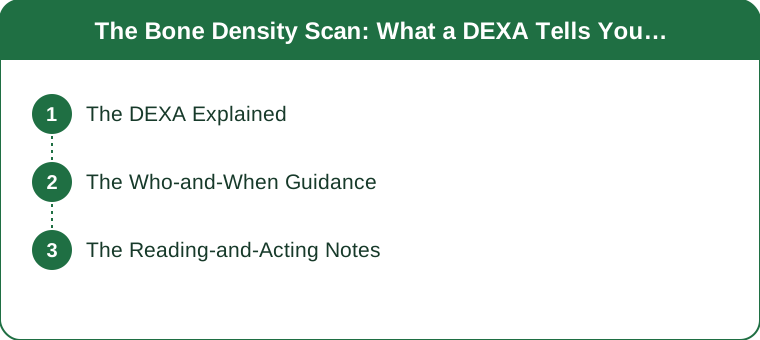
The DEXA Explained
What the scan is and does: the what-it-measures (the DEXA scan measuring bone mineral density — the strength-of-your-bones number; the gold-standard bone-health test), the painless-and-quick reality (the low-radiation, lie-still, few-minutes procedure — the easy, non-invasive scan; the nothing-to-fear), the T-score-and-Z-score basics (the T-score comparing to young-healthy bone, the Z-score to your-age-group — the numbers-that-classify; the normal, osteopenia, osteoporosis ranges), the silent-disease context (the bone-loss-you-can’t-feel — the scan-that-catches-it-early; the bone-health chapter’s why-screen urgency), and the informed-not-anxious frame (the scan as information-that-empowers-action — the know-your-bones; the catch-it-and-address-it opportunity).

The Who-and-When Guidance
Who should screen and when: the age-based-screening (the standard recommendation for women around-and-after-menopause — the postmenopausal-bone-loss window; the ask-your-doctor-about-timing), the risk-factor tier (the earlier screening for the higher-risk — the family-history, the low-body-weight, the certain-medications, the early-menopause; the risk-based-timing), the menopause-connection (the estrogen-loss accelerating bone-loss — the menopause-as-the-key-window; the why-postmenopausal-matters), the fracture-history flag (the broken-bone-from-minor-injury prompting a scan — the fragility-fracture signal), the talk-to-your-doctor rule (the personalized-screening-decision — the your-risk-factors-guide-the-timing; the individualized-not-one-size), and the repeat-scan-interval note (the follow-up-scans to track-change — the monitor-over-time; the doctor-sets-the-interval).
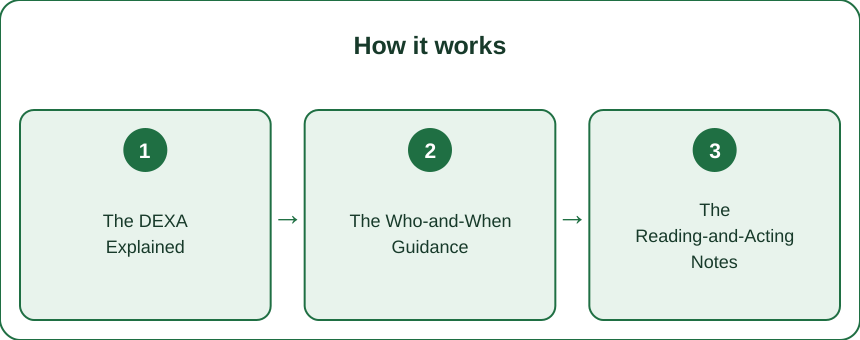
The Reading-and-Acting Notes
Making the results useful: the understand-your-numbers (the T-score-classification explained by your doctor — the what-does-it-mean conversation; the informed-interpretation), the osteopenia-is-a-warning (the low-but-not-osteoporosis as the act-now window — the prevent-the-progression; the lifestyle-levers matter most here), the lifestyle-levers-first (the impact-exercise, the strength-training, the calcium-and-vitamin-D from the bones chapters — the movement-and-nutrition foundation; the balance-training for fall-safety), the medication-conversation (the when-medication-is-indicated — the doctor-guided decision for higher-risk; the treatment-when-needed), the fall-prevention-priority (the balance-and-strength that prevents the fracture regardless of density — the balance-bone-safety chapter’s crucial layer; the don’t-fall-is-half-the-battle), the track-and-follow-up (the monitor-the-trend with repeat-scans — the see-if-it’s-working), and the frame (the bone density scan as the silent-disease’s early-warning — the DEXA that informs the exercise, nutrition and medical decisions; the bones-you-can’t-feel, measured and protected). Know the numbers, act on lifestyle, prevent the fall: the bones, monitored.
Bone loss is silent until something breaks — the DEXA scan measures density painlessly and catches it early. Women should screen around menopause (earlier with risk factors); ask your doctor about timing. Osteopenia is a warning to act with impact exercise, strength training and calcium — and fall-prevention protects you regardless of the number.
Keep Reading
This article is for general informational purposes only and is not medical advice. Always consult a qualified health professional for guidance specific to you.