Protein and Bone Health (The Nutrient Nobody Associates With Bones)
Ask anyone what bones need and the answer is calcium, possibly vitamin D. Almost nobody says protein — despite bone being roughly half protein by volume, and despite low protein intake being common in exactly the women most at risk. Here is why bone is not just calcium, how protein contributes, and what to do practically.

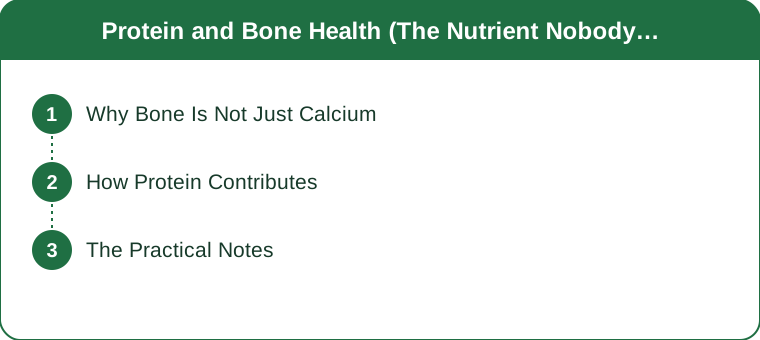
Why Bone Is Not Just Calcium
The matrix underneath: the the-bone-has-a-protein-matrix (the bone being built on a collagen protein framework from the bone-health-women logic — the protein-matrix), the the-calcium-mineralises-that-matrix (the calcium mineralising a structure that must exist first from the bone-health-women logic — the calcium-needs-a-matrix), the the-calcium-alone-is-not-enough (the calcium alone not producing strong bone from the calcium-rich-meals logic — the calcium-alone-insufficient), the the-vitamin-d-enables-absorption (the vitamin D enabling the calcium to be used from the vitamin-d-partnership logic — the vitamin-d-enables), the the-protein-intake-is-often-low (the protein intake being commonly low in older women from the bone-health-women logic — the protein-often-low), and the reframe (the bone as a protein matrix that calcium mineralises — which is why the nutrient conversation stopping at calcium leaves out the framework itself).

How Protein Contributes
The mechanisms: the the-builds-the-collagen-framework (the protein supplying the collagen matrix from the bone-health-women logic — the collagen-framework), the the-supports-muscle-which-loads-bone (the protein maintaining the muscle that loads bone from the impact-exercise logic — the muscle-loads-bone), the the-muscle-mass-and-bone-mass-track-together (the muscle and bone declining together from the impact-exercise logic — the muscle-and-bone-together), the the-supports-recovery-from-loading (the protein supporting adaptation to weight-bearing exercise from the weight-bearing logic — the supports-adaptation), the the-adequate-protein-supports-calcium-use (the adequate protein supporting rather than harming calcium balance from the bone-health-women logic — the supports-calcium-use), the the-the-old-acid-worry-is-outdated (the older concerns about protein leaching calcium not holding up from the bone-health-women logic — the outdated-worry), and the the-it-works-alongside-loading (the protein working alongside weight-bearing exercise, not instead of it from the weight-bearing logic — the alongside-loading).
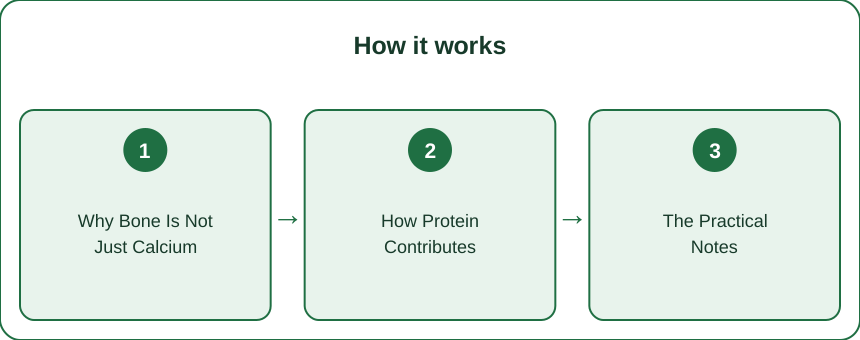
The Practical Notes
Applying it: the the-spread-protein-across-meals (the distributing protein across the day rather than one meal from the bone-health-women logic — the spread-across-meals), the the-include-protein-at-breakfast (the breakfast being the meal most often short on protein from the calcium-rich-meals logic — the protein-at-breakfast), the the-pair-with-calcium-rich-foods (the pairing protein with calcium sources from the calcium-rich-meals logic — the pair-with-calcium), the the-keep-vitamin-d-adequate (the maintaining adequate vitamin D alongside from the vitamin-d-partnership logic — the vitamin-d-adequate), the the-weight-bearing-exercise-is-still-primary (the loading the skeleton remaining the primary lever from the weight-bearing logic — the loading-is-primary), the the-strength-training-alongside (the strength training preserving both muscle and bone from the impact-exercise logic — the strength-training), the the-see-a-provider-about-bone-density (the discussing bone density and screening with a provider from the scan-guide logic — the see-a-provider), and the frame (the bone health as a protein matrix mineralised by calcium — needing adequate protein spread across meals, alongside vitamin D and weight-bearing exercise — the nutrient nobody associates with bones. Spread adequate protein across your meals, include it at breakfast, pair it with calcium and vitamin D, and keep weight-bearing exercise as the primary lever. This is general information, not medical advice.)
Ask anyone what bones need and the answer is calcium, possibly vitamin D — almost nobody says protein, despite bone being roughly half protein by volume, and despite low protein intake being common in exactly the women most at risk. Bone is not just calcium because it has a protein matrix, calcium mineralises that matrix, calcium alone is not enough, vitamin D enables absorption, and protein intake is often low. Protein contributes by building the collagen framework, supporting the muscle that loads bone, tracking with bone mass, supporting recovery from loading, supporting calcium use, and working alongside loading. Practically, spread protein across meals, include it at breakfast, pair with calcium-rich foods, keep vitamin D adequate, keep weight-bearing exercise primary, strength train alongside, and see a provider about bone density. This is general information, not medical advice.
Keep Reading
This article is for general informational purposes only and is not medical advice. Always consult a qualified health professional for guidance specific to you.